All Categories
Featured

Table of Contents
- – Evaluating Maryland Solar Panel Installation Co...
- – Methods The $750/kW Rebate, Up To $7,500, Affe...
- – The Value Of The 10 kW Suggested System Size F...
- – Evaluating Financing Plans When You Choose A M...
- – Roof Inspection Essentials For Your Maryland S...
- – Navigating The Intricacies Of Permits And HOA ...
Evaluating Maryland Solar Panel Installation Companies For Your Property
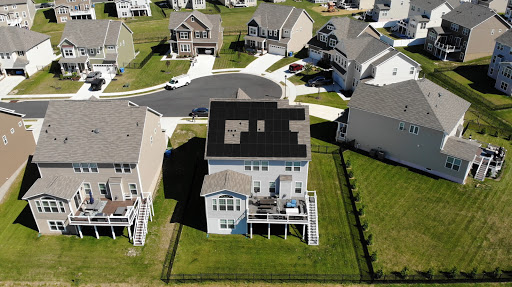
When you start exploring Maryland Solar Panel Installation Companies, you face a complex set of financial and technical compromises that determine the long-term viability of your investment. Because a standard residential system in this region usually ranges from $31,075 to $42,043 before incentives, choosing the right partner requires a careful balance between equipment quality, warranty terms, and localized expertise. Grasping How to choose among Maryland solar panel installation companies involves assessing how various firms manage regional permitting, heritage district compliance, and the integration of net billing. You must weigh the benefits of various financing structures against your specific household energy demands, which often require a 10 kW system to attain optimal performance. By evaluating the operational strengths and service models of these professionals, you will attain the clarity needed to identify which option aligns with your financial goals and property constraints.
“Check the installer's certifications and credentials.” — Lumina Solar
Methods The $750/kW Rebate, Up To $7,500, Affects Maryland Solar Panel Installation Outcomes.
The State Income-based Program offers a $750/kW rebate, up to $7,500, which significantly changes the financial landscape when you evaluate Who are the top Maryland solar panel installation companies? These financial incentives are designed to lower the barrier to entry, but they require careful coordination between the homeowner and the provider to guarantee all eligibility criteria are met.
“The selection of an FY27 MSAP Participating Contractor is required to complete and submit a new application for an upfront rebate reservation request (Step 1).” — energy.maryland.gov
To optimize your return on investment, you must balance these immediate financial deductions against the long-term efficiency of your system. Understanding the available state and federal mechanisms enables you to compare how different companies organize their installation quotes to incorporate these discounts.
| Incentive Type | Financial Benefit |
|---|---|
| Federal Investment Tax Credit | 30% of complete installation costs |
| Battery Storage Tax Credit | 30% of price, $5,000 cap |
| Sales Tax Exemption | 6% off equipment and labor |
| Property Tax Exemption | Excludes added home value from assessment |
| Maryland Solar Access Program | $750 per kW, up to $7,500 |
While these incentives provide substantial relief, they often come with particular filing requirements or income thresholds that may affect which technology or hardware an solar company recommends for your property. Confirm whether your chosen installer has direct experience processing the specific paperwork required for the State Income-based Program prior to signing a contract.
When evaluating solar panel installation, you must balance the upfront solar panel price in Maryland, which typically ranges from $31,075 to $42,043, against long-term financial advantages like the 30% federal credit, grid crediting, and the potential for renewable certificate income. You should contact solar installs in Maryland before comparing each estimate to verify the provider credentials, ensure your roof suitability meets local requirements, and navigate the complexities of Maryland solar permits or restrictive solar HOA rules in a heritage district. Choosing between a PPA and direct ownership depends on whether you prioritize immediate cost savings or the accelerated solar payback period of 8 to 11 years, while also considering how the State Income-based Program or assessment exemption might optimize your overall solar ROI.
The Value Of The 10 kW Suggested System Size For Maryland Solar Panel Installation
A 10 kW recommended system size constitutes the ideal capacity for most households to offset above-average local energy demands effectively. While a 7 kW system acts as a common baseline configuration for smaller footprints, scaling up to 10 kW ensures that the PV installation provides adequate output to meet high consumption patterns common in the region. When determining How to choose among Maryland solar panel installation companies, you must prioritize those that conduct a rigorous load analysis rather than simply resorting to a standard size.
System dimensioning involves balancing your physical roof space against your actual historical energy consumption. The subsequent table illustrates the trade-offs between these two common sizing tiers:
| Feature | 7 kW Baseline System | 10 kW Recommended System |
|---|---|---|
| Primary Application | Low-to-moderate energy users | High-demand households |
| Roof Footprint | Smaller, more flexible | Requires significant surface area |
| Upfront Cost | Lower entry point | Higher total capital investment |
| Energy Offset | Partial coverage | Comprehensive coverage |
Selecting an undersized system may fail to optimize your long-term savings, while an oversized system might lead to diminishing returns if your utility provider limits grid crediting credits for production that vastly exceeds your annual usage. Always examine your last twelve months of utility statements to ensure the suggested system capacity aligns precisely with your verified kilowatt-hour consumption rather than a generic estimate.
Evaluating Financing Plans When You Choose A Maryland Solar Panel Installation Service
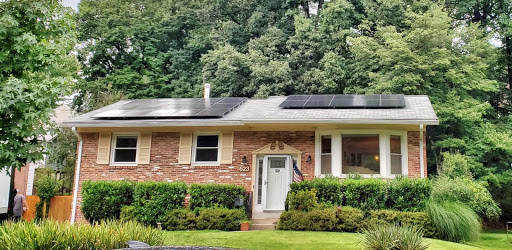
Choosing among Maryland Solar Panel Installation Companies requires you to evaluate how different payment structures impact your long-term ownership and access to financial incentives. Your selection of financing dictates whether you keep control over the equipment and the consequent tax benefits, or if you exchange those advantages for lower upfront capital requirements.
“Maryland law provides a 100% exemption to property tax for solar energy property or residential wind equipment.” — solarreviews.com
| Option | Ownership | Incentive Eligibility | Upfront Cost |
|---|---|---|---|
| Cash Purchase | Homeowner | Full | High |
| Solar Loan | Homeowner | Full | Low to Moderate |
| Lease | Third-party | None | Zero to Low |
| Power Purchase Agreement | Third-party | None | Zero |
When you evaluate who are the top Maryland Solar Panel Installation Companies, consider that cash purchases provide the highest long-term return by eliminating interest and maximizing the usefulness of the federal investment tax credit. Conversely, solar loans permit you to preserve cash flow while still keeping ownership of the system and its connected solar renewable energy certificates. If you choose for a lease or a PPA, you avoid maintenance responsibilities and upfront costs, but you forfeit rights to the federal tax incentive and other state-specific incentives.
Compare the interest rates of specialized solar loans against the potential loss of tax-advantaged savings to determine if a debt-based or equity-based approach aligns with your household budget.
Roof Inspection Essentials For Your Maryland Solar Panel Installation
Roof eligibility is the primary technical factor of system performance, defined by the physical integrity of your mounting surface and its capacity to receive steady, clear sunlight. When Finding a reliable Maryland solar panel installation company, you must emphasize a comprehensive assessment of your roof's condition, as the long-term efficiency of your array relies entirely on the positioning and health of the supporting structure.
“The Solar PV arrays associated with these structures are limited to 150 feet by 150 feet (no greater than 150 feet along either axis).” — baltimorecountymd.gov
Before committing to an installation, you must weigh several environmental and structural factors that influence how much electricity your panels can produce. These factors dictate not only the potential output of your system but also whether you will accrue additional costs for roof reinforcement or tree trimming prior to the installation procedure.
| Factor | Impact on Performance |
|---|---|
| Roof Orientation | South-facing surfaces usually yield the highest energy production in this region. |
| Shading Obstructions | Adjacent trees, chimneys, or neighboring structures substantially reduce output via voltage drops. |
| Remaining Lifespan | Systems should ideally be installed on roofs with at least 10 to 15 years of residual service life. |
| Structural Integrity | The roof must be capable of supporting the total weight of racks and high-efficiency panels. |
If your roof requires fixing, these must be addressed before the panels are mounted to avoid the need for expensive system removal and reinstallation later. Evaluate the age and material of your roofing shingles to ascertain if a replacement is necessary to match the 25-year expected lifespan of your solar hardware.
Review the specific warranty conditions provided by your solar company to confirm they cover possible roof-leak fix-ups resulting from the mounting hardware penetration.
Navigating The Intricacies Of Permits And HOA Policies For Maryland Solar Panel Installation
Maryland solar panel installation companies and what they offer include the essential service of managing local permitting requirements, homeowners association (HOA) rules, and historic district restrictions that vary significantly by municipality. These entities act as the primary liaison between your property and local regulatory bodies, ensuring that your array meets all legal mandates before construction begins.
“"A restrictive covenant regarding land use may not impose or act to impose unreasonable limitations on the installation of solar collection panels on the roof or exterior walls of improvements."” — facebook.com
Regulatory obstacles often dictate the technical layout of your system, particularly in protected areas. When operating with an solar company, evaluate how the following factors impact the feasibility of your project:
- Municipal Permitting: Each local municipality maintains unique building code interpretations that dictate electrical and structural safety standards for solar setup.
- HOA Oversight: Many associations implement aesthetic guidelines regarding panel visibility, color, and mounting height, which can restrict the placement of arrays on street-facing roof planes.
- Preservation Zone Mandates: Properties situated in a Heritage District often require additional approval from a local preservation commission, which frequently requires the use of low-profile hardware or limits installations to rear-facing roof areas.
Handling these requirements is a vital part of the procedure, as failing to secure proper documentation can result in significant delays or mandatory system modifications. Before signing a contract, ensure that your chosen solar firm provides a written warranty that they will handle all permit applications and commission appearances on your behalf.
Examine your property title and local maps to verify if your home resides within a prohibited area before seeking an estimate.

Table of Contents
- – Evaluating Maryland Solar Panel Installation Co...
- – Methods The $750/kW Rebate, Up To $7,500, Affe...
- – The Value Of The 10 kW Suggested System Size F...
- – Evaluating Financing Plans When You Choose A M...
- – Roof Inspection Essentials For Your Maryland S...
- – Navigating The Intricacies Of Permits And HOA ...
Latest Posts
When Your Roof Needs A Washington DC Photovoltaic Installation Company
Your Handbook To Choosing Pennsylvania Solar Panel Installation Companies
How Do You Locate Dependable Pennsylvania Solar Panel Installation Companies?
More
Latest Posts
When Your Roof Needs A Washington DC Photovoltaic Installation Company
Your Handbook To Choosing Pennsylvania Solar Panel Installation Companies
How Do You Locate Dependable Pennsylvania Solar Panel Installation Companies?